SHARE


 Democratic Republic of the Congo
20-05-2026 | di COOPI
DRC. COOPI’s commitment to combating gender-based violence in the eastern provinces
In the provinces of Ituri and North Kivu, in the Democratic Republic of the Congo, gender-based violence continues to represent a serious violation of the rights of women and girls, in a context marked by prolonged conflict, displacement, and deep inequalities.
To help address this issue, COOPI – Cooperazione Internazionale leads a consortium of five organisations, including HEAL Africa, SOFEPADI, ActionAid, and Help a Child, within the framework of the project “STAR-RdC: Consultancy services for the implementation of activities linked to gender-based violence (GBV)/EAS/HS within the framework of the implementation of the stabilisation and recovery project in the eastern DrC provinces”, funded by the World Bank and launched in June 2025, now in its closing phase. The initiative aims to strengthen prevention and response mechanisms to gender-based violence, while promoting community engagement and reinforcing local actors responsible for protection and assistance.
A survivor-centered approach
At the core of STAR-East is a survivor-centered approach built around the needs of communities. The project promotes access to health services and supports the strengthening of local referral and case management systems, with particular attention to safety, confidentiality, and the quality of care.
Prevention also involves the direct engagement of communities. Consultations, awareness-raising activities, and dialogue with local authorities, religious and traditional leaders, and civil society organizations help identify key risk factors and develop responses rooted in the local context.
An experience built since the late 1990s
STAR-RdC is part of a long-standing commitment COOPI has pursued since the end of the civil war in the eastern provinces of the DRC, which it seeks to consolidate. Through projects dedicated to the protection of survivors, the organization has developed an integrated approach combining community-based prevention, health, protection, and psychosocial support.
This work has enabled hundreds of women and girls to be supported through holistic care pathways and has contributed to strengthening community protection networks, involving focal points, psychosocial workers, community relays, and local actors.
A set of good practices
COOPI’s intervention in the DRC is based on strengthening the capacities of local authorities, health facilities, and community actors. Over the years, the organisation has invested in training practitioners and establishing inter-agency and provincial training-of-trainers groups to ensure continuity of skills.
Particular attention is given to integrating mental health and psychosocial support into assistance services, as well as continuously adapting interventions through needs assessments, studies, and service mapping.
At the same time, coordination with authorities and institutional actors helps strengthen collaboration mechanisms between different services, improving the quality and consistency of the response.
Results and impact
Over time, this approach has helped strengthen the response to gender-based violence in the areas of intervention, supporting tangible changes in communities and pathways in which more women and girls have been able to regain protection, with a reduction in forced marriages and cases of impunity, as well as new opportunities for school return and autonomy.
---
COOPI has been present in the Democratic Republic of the Congo since 1977. With its headquarters in Kinshasa, it operates in the provinces of Ituri, North Kivu, South Kivu, and Kasai Central in the sectors of protection, nutrition, food security, and health.
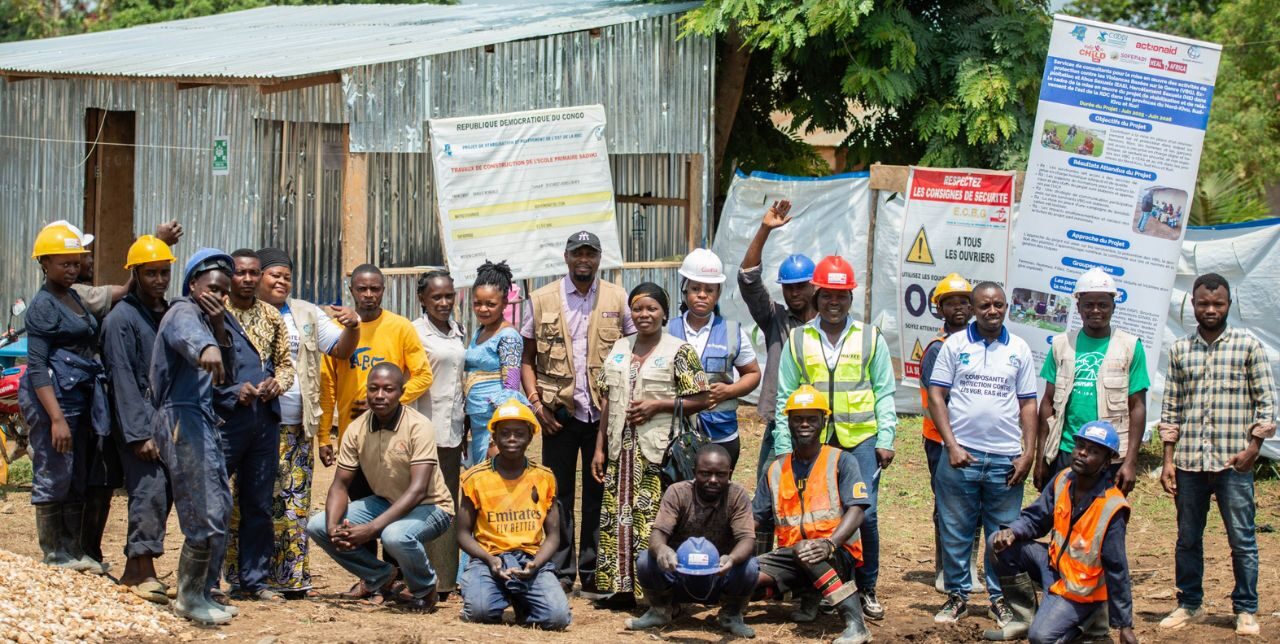
The cover image was taken during an awareness-raising event against gender-based violence held at a construction site.