SHARE


 Ethiopia
29-05-2026 | di COOPI
Ethiopia. How the Rapid Response Mechanism saved Hale’s family
War is terrible.
With these words, Hale Ali Bati, a 55-year-old mother now living as a refugee in the Haroune site for internally displaced persons, begins to tell her story. After the loss of her husband, Hale found herself supporting the entire weight of her family alone. This already immense responsibility was made even more dramatic by the violence of the internal conflict and the sudden order to evacuate the home where she had lived for years, taking with her seven children, including a boy with a disability.
After my husband died, all responsibilities of raising our children fell on my shoulders. In addition to suffering from the conflict, my family faced many other difficulties.
Hale recounts.
It was hard for me to move from place to place with my children, especially with one disabled boy. I took my children with me and stayed with relatives for a while. It was very difficult for a woman who had her own home to live at a relative’s house with a disabled child.
In that moment of total despair, her kebele leaders told her about the intervention of COOPI – Cooperazione Internazionale, active in the Meda Welabu Woreda to help populations affected by the conflict.
I was very surprised by the speed of the first support.
the woman recalls.
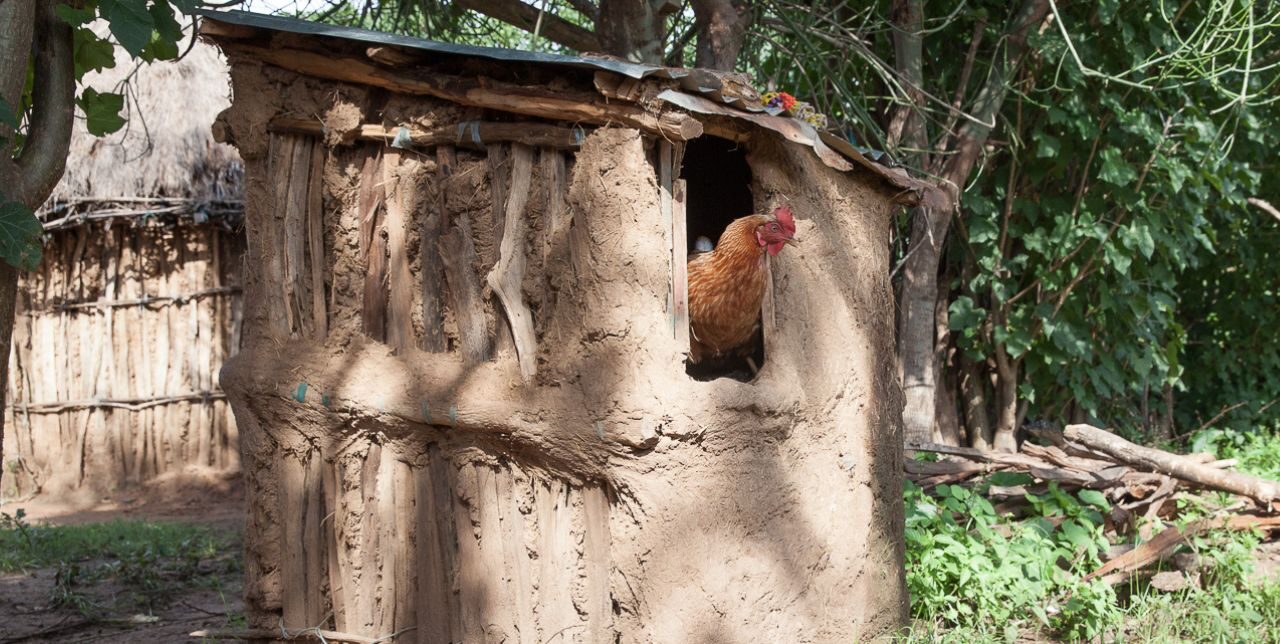
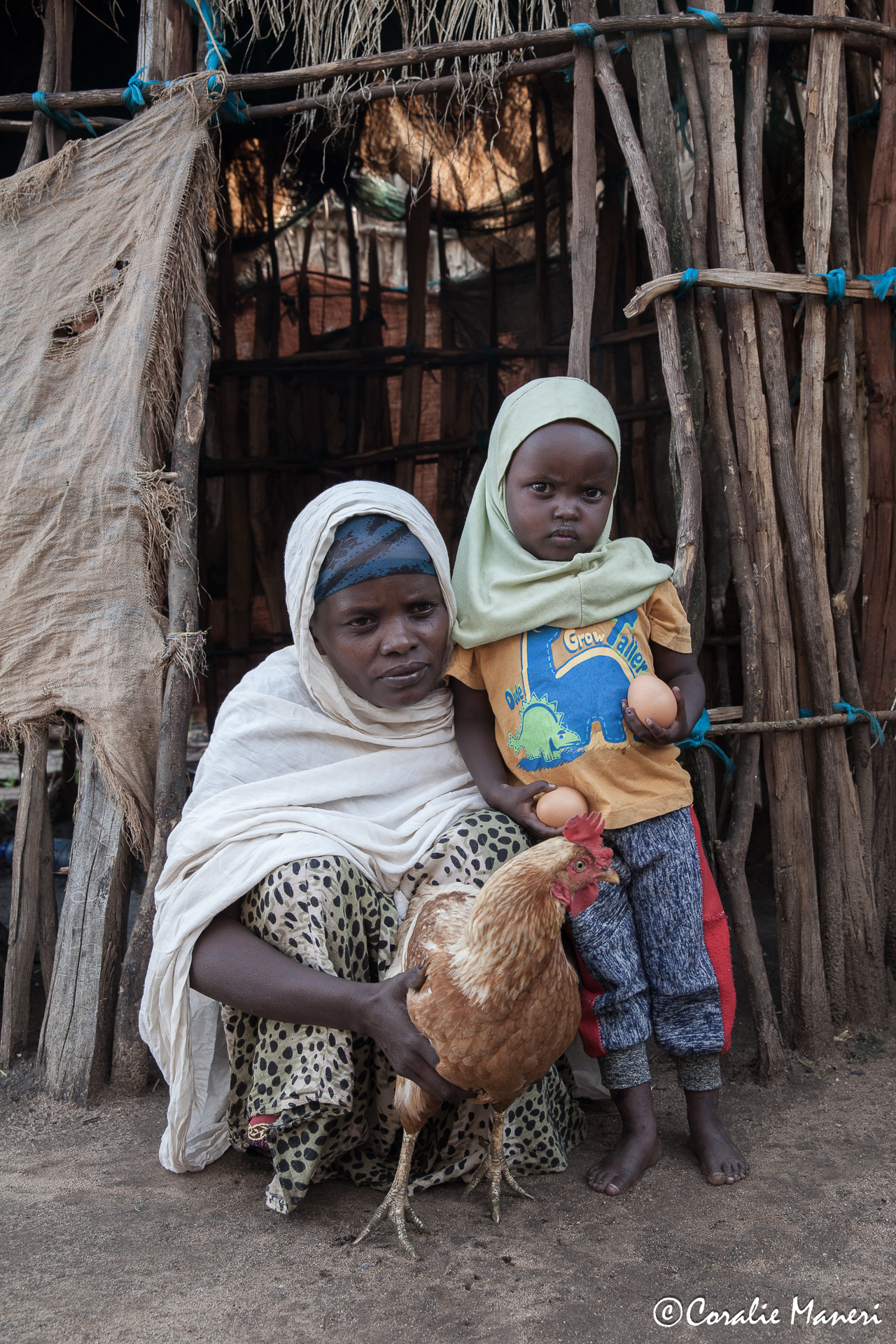
Hale received two rounds of cash transfers (2,300 birr in the first round and 6,900 birr in the second round) as well as emergency kits. Inside her small hut, Hale now smiles as she shows the kitchen utensils, blankets, jerry cans, mats, soap, and plastic sheets she received, but especially the mattress for her disabled son and the sanitary pads for her daughters. By covering the structure with COOPI’s tarpaulin, Hale built a safe shelter against the rain and wind. With the money received, she also purchased 10 chickens and 4 roosters for breeding, along with grains to feed them:
Now, the income from selling eggs has started to improve my livelihood. In the future, we will sell eggs and chickens in large quantities to residents of the city, and our life will improve. Even though I am old, I want to do more for my family.
The timeliness and speed of the aid efforts that brought the smile back to Hale are the direct result of the project "Rapid Response Mechanism (RRM 2.0) - Ethiopia", launched in November 2024 and now concluded. Funded by European Humanitarian Aid, with support from Irish Aid and the FCDO, it was managed by a consortium of thirteen non-governmental organisations led by the International Rescue Committee, within which COOPI joined forces with other international partners, including Concern Worldwide, NRC, ZOA, Plan International, Save the Children, Ethiopian Red Cross Society, Lutheran World Federation, World Vision, Action Against Hunger, Solidarites International, and Folkekirkens Nodhjaelp.
The immediate aid that transformed Hale’s life demonstrates the effectiveness of the consortium's new Geographic Area Lead coordination model. Within this network, COOPI operated on the front lines to ensure timely assistance by providing cash transfers, non-food items, and livelihood support to vulnerable families. Overcoming old emergency systems that took up to six weeks to activate, the new logistical structure reduced response times to an average of just 6–7 days, guaranteeing initial aid within two weeks of an alert.
This coordination made it possible to successfully respond to 48 alerts across 8 regions of the country, managing complex crises spanning conflict, drought, and epidemics. Thanks also to the pre-positioning of emergency supplies for over 130,000 people, the activities reached a total of 555,575 people in need, providing them with essential goods, shelter materials, healthcare, and water, sanitation, and hygiene (WASH) services.
The tangible results of this immense collective effort are reflected in the restored peace of mind of this family.
“Now I am satisfied compared to our previous condition. I would like to thank COOPI for standing with us during this difficult and hard time from the very beginning.
Hale concludes.
---
COOPI has been working in Ethiopia since 1995, providing development and humanitarian assistance to support the most vulnerable groups, including people internally displaced by conflict and/or natural disasters. Over time, it has reached more than 10,000,000 direct beneficiaries by implementing 164 projects in the country. COOPI focuses its actions on ensuring access to clean water, sanitation and hygiene services, food security, and livelihoods.
Photo credit: Coralie Maneri