SHARE


 Ethiopia
13-10-2025 | di COOPI
Ethiopia. Clean water, stronger livelihoods
In Ewa town, a small community in Ethiopia’s Afar Region, limited access to clean water and sanitation has long affected both household well-being and local economic activities. For women running small businesses, water scarcity has meant lost time, health risks, and constrained opportunities.
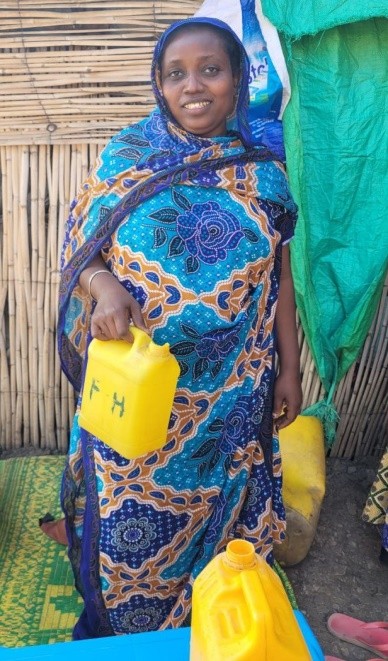
Meyrema Ali is one of them. A small business owner in Ewa, she earns her living by selling food, coffee, tea, and khat, supporting her three children and her husband. Together, they make financial decisions for the household, balancing daily needs with long-term priorities such as education.
Before the intervention, Meyrema spent between one and two hours every day collecting water from the river for both her business and her family. Like many other women in the town, she also relied on the river to wash clothes—an activity that further polluted an already unsafe water source. This routine affected her children’s school attendance and exposed her family and customers to serious health risks due to poor water quality.
Occasionally, Meyrema received water treatment chemicals from the local water and energy office or from non-governmental organizations. However, these measures were temporary and unreliable, offering only short-term protection rather than a sustainable solution.
This situation changed with the implementation of the project “Strengthening humanitarian response in Afar Region, with a special focus on Ewa and Yallo Woredas (Zone 4)”, carried out by COOPI – Cooperazione Internazionale and LVIA since June 2024 and funded by the Italian Ministry of Foreign Affairs and International Cooperation (MAECI) through AICS. By providing clean and reliable water to the community (a total of 74,901 people), the project has had a direct and lasting impact on daily life and local livelihoods.
Since gaining access to clean water, Meyrema has noticed immediate improvements in her business. Her customers now regularly compliment the better taste of her food, coffee, and tea. She no longer depends on inconsistent water treatment chemicals and can confidently offer safe water to her family and those she serves.
With water available at her doorstep, Meyrema completes household chores more efficiently and spends far less time on physically demanding labor. She estimates that she now saves more than ten hours each week—time she can reinvest in her business. This has allowed her to expand her activities by selling water in 3- and 5-litre jerry cans, increasing her household’s monthly income by around 5%.
While the income increase is modest, it has made a meaningful difference. Meyrema can now reliably cover daily expenses such as mobile phone credit, groceries, and school materials for her children, strengthening her family’s economic stability.
Focus group discussions conducted as part of the project indicate that many other women in Ewa town have experienced similar benefits, gaining time for income-generating activities, education, and household responsibilities. These community-wide improvements highlight the effectiveness of the intervention and its potential for replication in other areas facing chronic challenges in access to safe water.
Meyrema’s story shows how clean water is not only a basic need, but a catalyst for dignity, economic empowerment, and resilience—especially for women at the heart of their communities.
COOPI has been present in Ethiopia since 1995, providing development and humanitarian assistance to support the most vulnerable groups, such as internally displaced persons due to conflicts and/or natural hazards through a multisectoral and integrated approach.