SHARE


 Ethiopia
27-10-2025 | di COOPI
Ethiopia. How access to water is transforming education in Afar
In the Afar Region of Ethiopia, access to safe water is not only a matter of health—it is a decisive factor in whether children and young people can attend school, focus on their studies, and imagine a different future.
Through the project “Strengthening humanitarian response in Afar Region, with a special focus on Ewa and Yallo Woredas (Zone 4)”, implemented by COOPI – Cooperazione Internazionale and LVIA since June 2024 and funded by the Italian Ministry of Foreign Affairs and International Cooperation (MAECI) through AICS (Italian Agency for Development Cooperation), concrete improvements in water access are already having a tangible impact on students’ daily lives.
One of them is an 18-year-old female student attending Ewa High School, who asked to remain anonymous. She describes how the water works carried out by COOPI in her neighborhood have profoundly changed her routine—and her prospects.
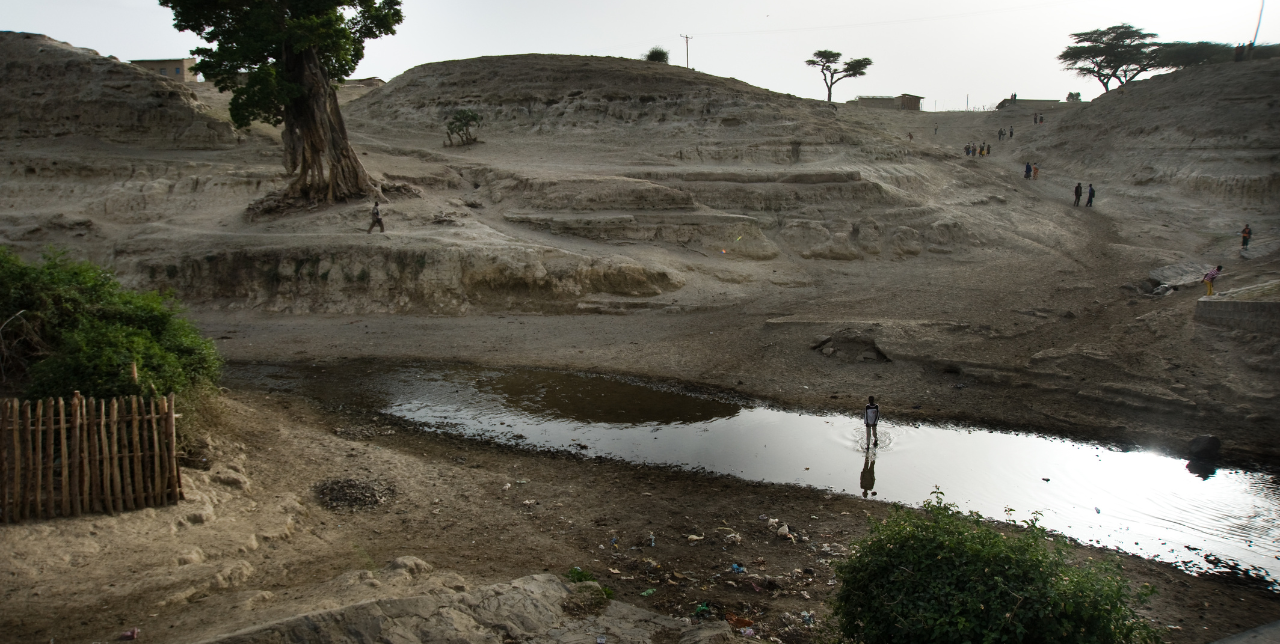
Before the intervention, she had to walk for at least an hour to reach the river where her community collected water for washing clothes and cleaning. Although drinking and cooking water could sometimes be obtained from neighbors, this often meant waiting in long lines. These delays frequently caused her to arrive late at school or miss classes altogether. She also recalls how tensions would sometimes arise among women waiting their turn, occasionally escalating into disputes that resulted in damaged jerry cans.
The installation of new water points has removed many of these daily burdens. She explains:
Now I can go to school without worrying about fetching water first. I am able to focus on my lessons and arrive on time.
The benefits extend beyond the household. The student notes that handwashing practices at her school have significantly improved following the installation of water points supported by the project. In addition, the ongoing construction of latrines gives her hope that she and her classmates will soon have access to adequate sanitation facilities, enabling them to better maintain personal hygiene in a safe and dignified environment.
At the same time, she highlights remaining challenges. The lack of dignity kits and resting rooms at school continues to prevent her from attending classes during her menstrual cycle—an issue that, she believes, could be addressed through future interventions focused on menstrual hygiene management and gender-sensitive education support.
Overall, the student emphasizes the importance of the needs assessment conducted by COOPI prior to the project’s implementation. By listening to the community and identifying its most pressing priorities, the intervention has been able to respond effectively to real needs, strengthening local ownership and satisfaction.
This story reflects how targeted humanitarian action—starting from something as essential as water—can reduce inequalities, support education, and help young women reclaim time, safety, and opportunity. In Afar, access to water is opening the door to learning, dignity, and a more hopeful future.
COOPI has been present in Ethiopia since 1995, providing development and humanitarian assistance to support the most vulnerable groups, such as internally displaced persons due to conflicts and/or natural hazards through a multisectoral and integrated approach.
Photo credits: Alessandro Gandolfi