SHARE


 Venezuela
14-07-2026 | di COOPI
The invisible emergency: the earthquake in Venezuela beyond official data
the rapid needs assessment carried out by the ÍNTEGRAS Consortium, led by COOPI – Cooperazione Internazionale, found that, despite the efforts made, aid has only reached one in three affected families.
Almost three weeks after the devastating magnitude 7.2 and 7.5 earthquakes that struck the north-central region of Venezuela, the official data of the catastrophe continue to rise day by day. The latest toll released by OCHA paints a dramatic scenario: 4,490 dead, over 16,740 injured, and nearly 18,000 people suddenly left homeless. However, a deep and even more complex crisis exists: the emergency of the "invisible" people of the earthquake.
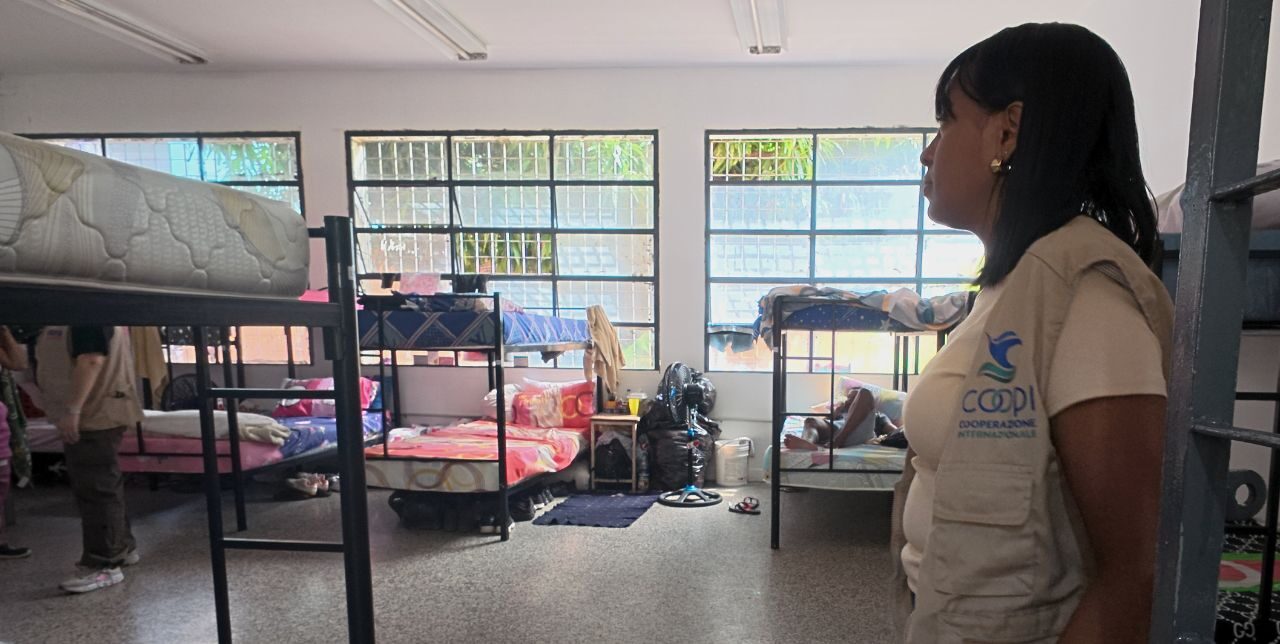
Between 27 June and 3 July 2026, the ÍNTEGRAS Consortium – the strategic alliance uniting COOPI (as lead agency), the Lutheran World Federation (LWF), HIAS, PALUZ, and PLAFAM – carried out a rapid needs assessment on the ground in the three worst-affected states (Caracas, Miranda, and La Guaira), conducting surveys in 17 formal temporary shelters, 15 communities, and 7 different locations. The main objective was to analyse the real situation not only inside formal reception centres but also outside them, in order to reach areas where assistance remains scarce.
The results obtained show an impressive humanitarian gap. Two out of three affected families, in fact, no longer sleep in their homes, but they are not found inside formal shelters either. They live in the open air, in makeshift shelters or are hosted by relatives under conditions of extreme precarity. At the time of the Consortium's data collection, none of these families living outside formal temporary shelters had ever been contacted by any humanitarian or institutional organisation. 53% of them have completely lost all their sources of income and face a dramatic information barrier: 79% have received no official information on what to do after the disaster, and 84% state they have come across false or contradictory news.
In the worst-affected areas, such as the Capital District, Miranda state, and the coastal area of La Guaira, entire communities, terrified by the more than 1,000 aftershocks, continue to move spontaneously towards high-ground areas, effectively distancing themselves from hospitals and traditional distribution points.
The humanitarian response must have the capacity to also reach where it cannot be seen, moving beyond the physical boundaries of institutional shelters. Outside official centres, there are thousands of women, children, and people with chronic illnesses facing total isolation, without safe water, without income, and deprived of reliable information on how to receive assistance. Our commitment as the ÍNTEGRAS Consortium is structured precisely to activate mobile teams and active search strategies, intercepting the most vulnerable needs wherever they may be.
states Stefano Brigoni, COOPI Head of Mission in Venezuela.
COOPI, permanently present in Venezuela since 2019 with both development and humanitarian assistance projects, took immediate action to support the most vulnerable population affected by the earthquakes, offering a multi-sectoral response based on the protection of women and children from violence, psychosocial support, and the distribution of hygiene kits and dignity kits.
To help the displaced population in the most remote and “invisible” areas, where the need is greatest, support COOPI right now.
DONATE FOR THE EMERGENCY IN VENEZUELA: https://dona.coopi.org/terremoto-venezuela/~mia-donazione