SHARE


 Venezuela
16-06-2026 | di COOPI
Venezuela. Communities in Sucre better prepared to manage water and the environment
I thought I already knew a lot, but thanks to this experience I realised that there is always something new to learn every day.
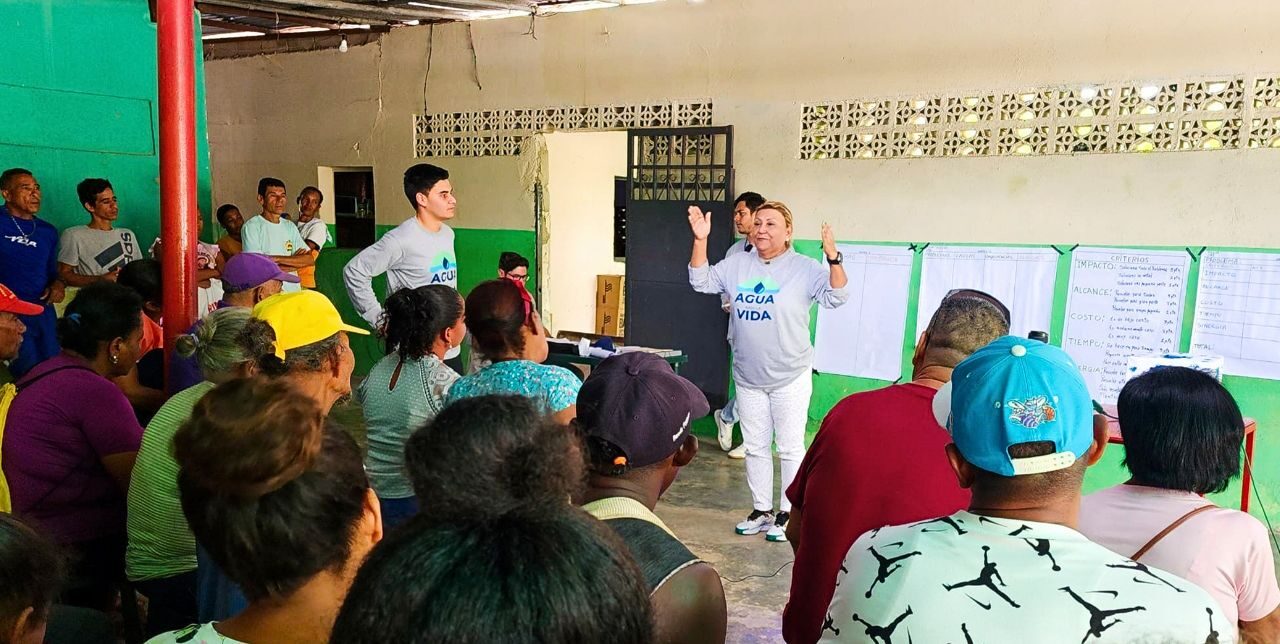
These words from Tamara, 57, reflect the journey undertaken by the communities of Antonio Guzmán Blanco, El Lirio de Guayacán and San Antonio de Irapa as part of the "Agua para la Vida" (“Water for Life”) project, implemented by COOPI – Cooperazione Internazionale in partnership with the Venezuelan NGO CEDISUC, with the support of the European Union. The initiative is strengthening community participation in the management of essential services and in the search for for shared solutions to address water and environmental challenges.
While the project’s planned infrastructure works are nearing completion, communities have strengthened their capacity to organise, plan and actively participate in the decision-making processes that will lead to sustainable, long-term solutions.
For Tamara, one of the most significant outcomes of the process has been the increased preparedness and shared sense of responsibility developed within the community.
We have learned to coordinate and prepare in advance to deal with any problem. The community is very satisfied with the project because we are directly involved in solving our water access challenges and, thanks to all this planning, we are already well on our way to securing this service.
Today, the three community WASH Committees responsible for water management are fully operational, and each has its own validated Strategic Plan. These plans are important tools that will support community members in the future management of infrastructure and water and hygiene-related activities.
Alongside its work on water access, the project has promoted activities focused on solid waste management, with women playing a leading role: 87% of the committees are chaired by women. The communities have completed waste assessments and participated in training activities on waste separation, recycling and opportunities to recover value from plastic, glass and metal materials. This work goes beyond environmental protection and is part of a circular economy approach that can generate income and foster greater community self-reliance.

This project is extremely important because, given the situation in Venezuela, COOPI and CEDISUC have helped us address problems and improve living conditions in our communities. The initiative has been excellent, and we hope it can continue to be implemented in other communities.
Tamara concludes.
COOPI has been working in Venezuela since 2019, implementing 27 projects and reaching more than 400,000 direct beneficiaries. Its interventions focus on gender-based violence prevention, protection of vulnerable groups and strengthening community resilience through an integrated multisectoral approach.