SHARE


 Venezuela
10-12-2025 | di COOPI
Venezuela. Healthcare and protection for over 70,000 people
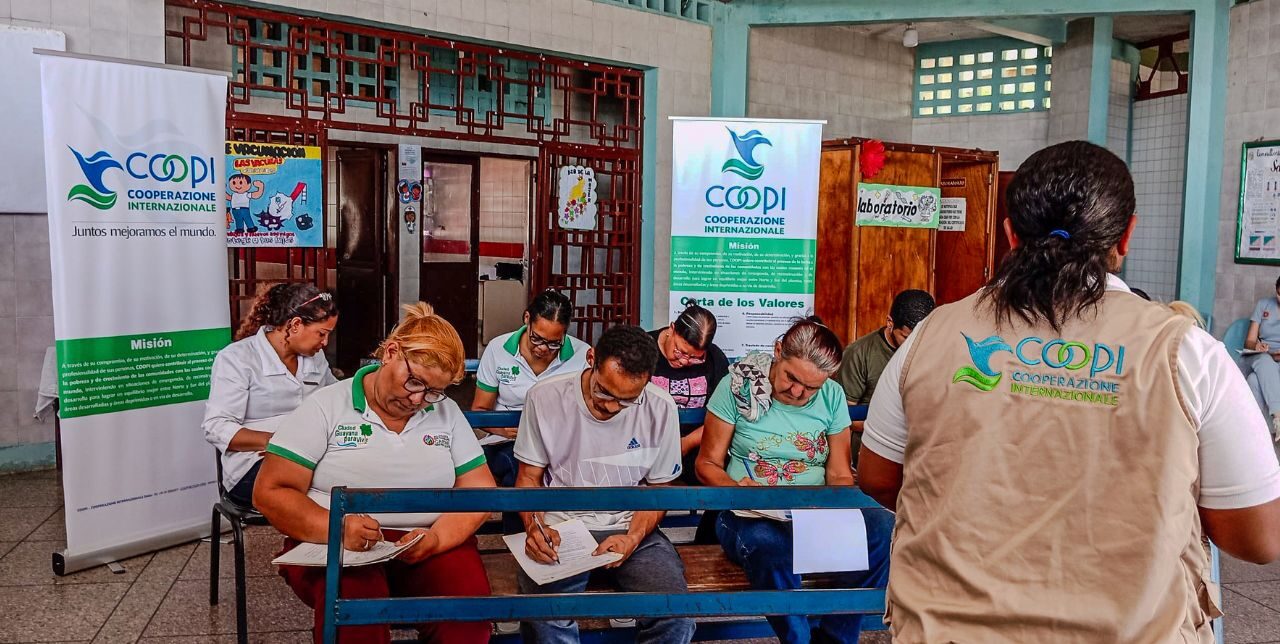
The second phase of the “Integrated response to the emergency needs of the most vulnerable population in Venezuela” has been completed. The project was carried out by the CONAHVE Consortium, led by COOPI - Cooperazione Internazionale and co-funded by European Humanitarian Aid, with the aim of strengthening health, protection, and access to essential services in the country’s most vulnerable and remote areas.
In a context marked by persistent socio-economic challenges and uneven access to essential services, the CONAHVE Consortium –a network of 16 national and international organizations coordinated by COOPI– reached 70,636 people in seven states (Amazonas, Bolívar, Delta Amacuro, Falcón, Miranda, Sucre, Zulia) and the Capital District, exceeding the initial forecast of 58,174 beneficiaries. Among those reached, 47,643 were women. The intervention paid particular attention to the most vulnerable groups – children under five, adolescents, pregnant and breastfeeding women, and people with disabilities – operating in urban, rural, indigenous, and riverine contexts and adapting activities to local specificities, through coordination with local authorities and stakeholders.
Health and psychosocial support
The action strengthened access to primary health care, sexual and reproductive health services, nutritional screening, and mental and psychosocial health support, reaching 40,970 people, particularly in rural and riverine areas.
Through medical consultations and specialized visits, special attention was given to the prevention of early pregnancies and assistance to pregnant women. At the same time, nutritional screening for children under five and pregnant or breastfeeding women reinforced identification and referral mechanisms for malnutrition cases, improving support to the most vulnerable.
Water, hygiene and facility rehabilitation
To help reduce health risks and improve service quality, the Consortium rehabilitated water, sanitation and energy systems in health and protection facilities. The distribution of hygiene kits, water purification kits and dignity kits reached over 11,000 people, promoting adequate hygiene practices and preventing waterborne diseases.
Protection and violence prevention
Protection activities involved 29,666 people, in a context where risks related to gender-based violence, human trafficking and child exploitation persist.
Over 4,000 individuals received individual assistance through case management, legal and psychosocial support. The intervention helped to create safer and more protective environments by strengthening referral mechanisms, reducing exposure to violence and promoting inclusive approaches for women, adolescents, indigenous peoples, older persons, persons with disabilities and LGBTIQ+ individuals.
Local authorities and community leaders played a central role in contextualizing interventions, ensuring cultural relevance and supporting the sustainability of actions over time.
Climate emergency response
Between June and August 2025, severe flooding affected the states of Amazonas, Bolívar and Delta Amacuro. Through the activation of the Crisis Modifier – a mechanism allowing rapid reallocation of resources to respond to new emergencies – the Consortium provided immediate assistance to 2,249 displaced people, distributing essential items and ensuring multisectoral support during the early stages of the emergency.
The results achieved confirm the effectiveness of an integrated, locally rooted intervention model, capable of responding in a coordinated and flexible manner to complex and evolving needs.
---
Since 2018, COOPI has implemented 27 projects in Venezuela, primarily in emergency response, reaching a total of 408,322 direct beneficiaries. Since then, the organization has continued working in the country in collaboration with local networks, associations and authorities to improve living conditions for vulnerable communities, with a particular focus on women exposed to violence, protection of at-risk groups, and strengthening community resilience through an integrated multisectoral approach.